

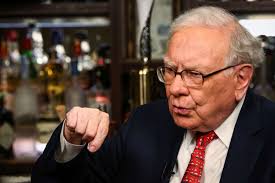
The world’s number one investor, Warren Buffett invests 1.33 Billion in 3 stocks: home-builder Lennar (NYSE: LEN), premium beer importer Constellation Brands (NYSE: STZ) and oil giant Chevron (NYSE: CVX).
Spanning the sunset of one century and the sunrise of another, millennials stand to benefit not only from the new technologies now arising, but their familiarity with and knowledge of the established order. Yes, AI is exciting. AI models can write poetry and automate the mundane. AI can personalize wellness plans, track carbon footprints, suggest local eco-choices, and even help detect early signs of health issues through wearables. But the world will always need picks and shovels, even when, in the future, those tools are driven by AI.
No one knows this better than legendary investor Warren Buffett. His 60 years in business is a master class in investing. Over that time, that is from 1965 – 1925, the S&P 500 has appreciated by 39,054%. By contrast, shares of Mr. Buffett’s Berkshire Hathaway have gone up by 5,502,284%. That’s 140 times the market gain of the largest companies.
So what is Buffett’s secret investing sauce. Is there anything to learn from reverse engineering his investing approach? We think there is. Let’s examine three of Buffett’s latest plays to decipher their rationale. But before we do that, here is Buffet’s counsel to Millennials and Zoomers.
Buffett Lessons for Millennials & Zoomers
1. Patience Outperforms Hype
Buffett built his fortune by waiting, not chasing. He buys quality businesses and holds them through storms and bubbles alike. Even good businesses have bad days. Don’t jump ship because the sea turns rough. In a culture that promotes instant gratification, patience is virtue. Long-term compounding, where the income from your investment earns more income, is the real engine of growth. As a result, the earlier you start investing the better. Then time, far from being an enemy, becomes your greatest ally. Many Millennials and Zoomers can expect to live past 80.
2. Understand Before You Invest
Never invest in a business you don’t understand. Buffett reads thousands of pages a week before making a move. Whether it’s stocks, crypto, or startups, curiosity beats FOMO (Fear of Missing Out). Learn how things actually work; then make an investment based on knowledge instead of vibes or hype.
Values Are the New Alpha
Millennials are concerned about social issues, according to the Pew Research Center. They are more likely than Baby Boomers to support companies and brands that align with their values and demonstrate social responsibility. That’s exactly in line with Buffett’s thinking. Buffett invests in companies with integrity, durability, and purpose, not just quarterly profits. So he aligns his money with his values.
Investing in companies that make life better, not just making shareholders richer, isn’t going soft, it’s smart, because, says Buffett, long-term trust builds long-term growth. Let’s take a look now at three recent Buffett investments. Why did Buffett think they were such great plays?
Lennar (NYSE: LEN)
Warren Buffett’s Berkshire Hathaway bought shares of Lennar in both the first and second quarters of 2025. The first quarter (Q1) was for 1.93 million shares, valued at $222 million. The second quarter (Q2) investment was larger: 5.3 million shares for approximately $575 million. These investments were revealed in a securities filing of August 2025. The LENNAR stake now totals over 7 million shares, with a value of about $800 million as at June 30, 2025.
Lennar is a large and established player in the U.S. home-building industry. Over the past twelve months, the company generated roughly $35 billion in revenue. Yet, despite this impressive top line, its profitability has been falling: net income was around $2.7 billion over the most recent twelve-month period, down from $3.9 billion in 2023, and $4.6 billion in 2022.
Undoubtedly, this is a reflection of wider housing market woes; rising costs and higher financing rates have squeezed earnings. Even so, Lennar’s valuation appears reasonably attractive: its price-to-earnings (P/E) ratio is approximately 12.7×. In contrast, the forward P/E ratio of the S&P 500 without the “Mag 7” stocks is estimated to be around 18.4x, based on mid-2024 data. This would make Lennar very good value for money.
So what’s the deal. Could it be interest rates? In January 2024, the fed funds rate was high: 5.33%. In December 2024, at 4.48%, it was still pretty elevated. Moreover, in the latter half of 2024, expectations of an interest rate cut were widespread. The general view was that cuts would start in September 2024 and total about 75 basis points for the year. If interest rates fell, what major industry would likely benefit most? Undoubtedly, reduced interest rates would make home ownership more affordable. Lower home prices mean increased demand and increased demand drives up revenues and, hopefully, profits.
Constellation Brands (NYSE: STZ)
In Shakespeare’s Macbeth, the porter warns that alcohol “provokes the desire, but… takes away the performance”. Millennials and the Gen Z generation appear to be listening. The percentage of U.S. adults who drink is the lowest it’s been for 90 years, according to a recent Gallup poll. There is a growing belief among Americans that even moderate alcohol consumption is bad for one’s health, and that’s become the prevailing view for the first time.
Beer is falling from the perch it held in the late 1970s and early 80s. In 1981, U.S. beer consumption reached a peak, when persons 14 years and older each consumed 1.39 gallons of pure alcohol by guzzling beer. The figure had fallen to 1.02 gallons by 2022; since then, beer shipments have continued to decline. So is this the end of the “beer run”?
Perhaps not. Despite the long-term decline in U.S. beer consumption, investment in the alcoholic beverages sector makes sense, particularly if it’s through a company like Constellation Brands. Here’s why:
First, Constellation dominates the premium import beer category, a segment that has continued to grow even as overall beer consumption has fallen. Brands like Modelo, Corona, and Pacifico have steadily stolen market share from domestic beers, a result of consumers “trading up” to higher-quality and lifestyle-aligned offerings. This “premiumization” has allowed Constellation to maintain strong pricing power and attractive margins even as total units sold decline.
Second, the company has intentionally diversified into spirits and ready-to-drink (RTD) beverages, two categories with much stronger growth trajectories than traditional beer. Constellation’s offerings of premium tequila, RTD cocktails, and select wine and spirits have been providing additional avenues for revenue growth and margin expansion. These developments have not only reduced Constellation’s reliance on beer, but positioned the company for growth across several consumer segments where demand is rising, rather than shrinking.
Third, in the past, Constellation has benefited from exceptional distribution strength and retail presence. This is a durable competitive advantage. The company’s relationships with distributors and retailers has allowed it to secure prime shelf placement, robust marketing exposure, and broad national coverage. In a crowded beverage market place, where visibility often determines consumer choice, Constellation’s distribution muscle helps it capture outsized share even in a challenged category.
However, the investment case is not without meaningful risks.
A major concern is the secular decline in alcohol consumption, particularly among younger consumers. Even though premium beer continues to outperform mass-market brands, the generational shift away from alcohol could ultimately depress category volumes more broadly than premiumization can offset.
At the same time, growing competition from spirits, hard seltzers, and non-alcoholic alternatives is fragmenting consumer preferences, with newer entrants and shifting trends steadily pulling share away from beer, imported or otherwise, leaving Constellation’s diversification helpful but not fully protective.
Taken together, Constellation Brands offers a mix of flexibility and opportunity. The company owns powerful brands that are placed in the right segment of the beer market. Constellation has also diversified into higher-growth categories. Finally, it has distribution advantages that are difficult for competitors to replicate.
Chevron (NYSE: CVX)
Chevron is an attractive long-term investment for a couple of reasons. The company has historically demonstrated one of the most disciplined capital-allocation strategies in the energy sector. It maintains a strong balance sheet, generates substantial free cash flow at even moderate oil prices, and returns that cash to shareholders through reliable dividends and buybacks. With a long history of dividend stability and a payout designed to withstand commodity cycles, Chevron offers investors a combination of income and investment growth that has proven difficult for other major oil producers to match.
Chevron’s global project portfolio positions the company to benefit from sustained demand for oil and natural gas over the coming decades. For example, in January 2025, the company started production at its $48 billion expansion of the giant Tengiz oilfield in Kazakhstan. This will bring its output to around 1% of global crude supply. The Tengiz field accounts for a large part of landlocked Kazakhstan’s oil production and has been a major cash generator for Chevron since 1993.
Chevron’s other investments include high-quality assets, such as U.S. shale, deep-water projects, and liquefied natural gas, giving it low production costs and long reserve life. This allows the company to remain profitable even when energy prices fluctuate.
There are pros and cons of investing in Chevron. Mr. Buffett obviously thinks the pros outweigh the cons. See if you agree.
On the positive side, the company benefits from structurally strong global demand for oil and natural gas, as well as a tight supply environment created by years of underinvestment across the industry. These are conditions that help support higher commodity prices and strong cash flow generation. At the same time, Chevron’s disciplined capital allocation, durable asset base, and shareholder-friendly dividends position it well to capitalize on these favorable trends.
However, the company also faces meaningful external headwinds. Growing regulatory pressure toward decarbonization increases compliance costs and may constrain future development opportunities. In addition, persistent geopolitical uncertainty makes oil prices highly unpredictable, putting earnings at risk during downturns. Taken together, Chevron offers investors a blend of resilience, income stability, and exposure to long-term global energy demand, but it also requires being comfortable with policy risk and the inevitable seesaw of commodity prices.
Conclusion
Warren Buffett’s recent moves into Lennar, Constellation Brands, and Chevron aren’t random bets, they’re a blueprint for how younger investors can think long-term in a world that changes fast but still relies on timeless fundamentals. Each of these companies represents a different pillar of Buffett’s philosophy. These pillars are buying durable businesses, leaning into structural trends rather than chasing hype, and investing where long-term demand is undeniable.
Lennar is Buffett’s vote of confidence in one of the biggest generational opportunities ahead: housing. Millennials and Zoomers are now the largest groups entering their prime home-buying years; thus when interest rates eventually ease, demand for homes is likely to surge. As a company that is efficient, well-capitalized, and already producing tens of billions in revenue, Lennar stands to benefit from that wave. Buffett isn’t buying a housing boom; he’s buying a demographic inevitability.
Constellation Brands is his play on changing consumer behavior. Younger generations are drinking less overall but upgrading when they do drink. They’re choosing quality over quantity, experiences over excess. Constellation owns the top foreign brands, like Modelo and Corona, that Millennials and Zoomers actually reach for today, plus the company is expanding into the spirits and ready-to-drink beverage sectors where such consumers are driving growth. Here, Buffett is betting on evolution, not nostalgia.
Chevron, meanwhile, is his reminder that the world still runs on fossil fuels, and will for decades. While Millennials and Gen Z are pushing for cleaner alternatives, global demand for oil and natural gas remains strong. Chevron’s disciplined spending, massive cash flow, and shareholder-friendly dividends make it a rare combination of capital appreciation and income. Even in a transitioning energy landscape, Buffett sees Chevron as a financial anchor.
Taken together, these three companies show exactly how Buffett thinks: follow the data, ignore the noise, and invest in businesses that will matter not just this year, but for the next 30 years. For Millennials and Gen Z facing inflation, uncertainty, and a nonstop stream of market hype, that’s a powerful roadmap. Slow and steady always wins the investment race.