

TLDR:
- Portfolio: Early investments in platforms like Ether.Fi, Irys, Dakota, Matter Labs, and World – turning them into long-term powerhouses’ positions Brukhman as one of the architects behind crypto’s most durable systems.
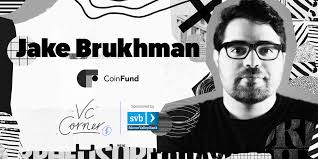
- Status: Jake Brukhman, Founder and CEO of CoinFund, a crypto investing VC firm launched in 2015, now managing hundreds of millions after navigating multiple booms and busts. He spent over a decade investing in decentralized finance, blockchain infrastructure, and emerging AI networks.
- Approach: Research-driven, patient, and believing in building long-term value by scaling the foundational technologies rather than the short-term trends.
Heard of Jake Brukhman?
The investor behind shaping crypto infrastructure.
Picture it’s 2015, Bitcoin prices are in dumps. Headlines are being made everywhere that crypto is dead. Few people see it as a gamble. The enthusiasm has subsided, and investors are backing out. During that period, Jake Brukhman founded CoinFund, a new venture capital business, in 2015. A computer scientist by profession, Jake cut his teeth on big tech giants, Amazon, and on the trading floors of Walls of Street before diving into the world of Blockchain.
Jake’s blockchain journey started in 2011, in the early history. Brukhman realized that the decentralized networks could reshape the entire internet, where control is not confined to the centralized authorities only. This vision became the foundation of CoinFund by investing in networks and protocols where value drives participation, not speculation.
Brukhman is also passionate about the interaction of tech and art, resulting in the founding of FIRSTEDITION.XYZ is an online blockchain-based digital-art gallery. Beyond investing, he is an advisor at projects like The Graph, Aragon, Fair Launch Capital, and Balancer.
Jake didn’t just invest; he even mined some of the early Ethereum blocks and interviewed the founders during the chaotic ICO, 2017 boom, betting on bold ideas.
Moving forward through the ups and downs, the brutal bear markets testing everyone’s patience, the DeFi boom in 2020, where borrowing and lending exploded without banks. The NFT craze in 2021, turning digital art into real assets, and the tough regulatory headaches are making life hard for the whole industry from 2022-2024. Jake not just survived all of this, but he’s thriving. It’s not about quick wins, but the long-lasting approach to sustain a firm for a decade.
Jake Bruckman invests where the internet is heading next – Ether.Fi(Liquid Restaking Protocol), Dakota (Business Finance), Pluralis(Open AI Training), and Matter Labs (Scaling Ethereum using ZK). His strategy focuses on the long-term growth of ecosystems rather than short-term hype.
How is Jake’s perspective different from other investors?
Jake Bruckman isn’t your usual suit-tie investor who only cares for quick and fast profits. He sees something bigger, a “new internet” being built by decentralized networks instead of a single company controlling everything. He believes in building systems like the gardens, where everyone can water it and benefit together at the same time, instead of a top-tier factory controlled by a few bosses.
More traditional Venture capitalists focus on centralized projects. This is a simple approach: grow fast, build big, and sell within a few years for profit. However, Jake’s perspective is different. He focuses on sticking around for a long period of time. He invests in the infrastructure that solves the problem and returns to the everyday user. The investment might be in seed projects, unknown to many now, but his predictions turn out to be right in the future due to his quantitative analysis experience and engineering-based decisions. A good example of this is eyeing the integration of Crypto and AI, tokenizing AI Models so intelligence can be owned and traded by everyone, like the stock market, and not just a few individuals.
This is where Jake stands apart. Others focus on consensus committees, where ideas are voted on by groups. Jake opposes and argues that this kills creativity and great returns. He believes in having a one-on-one conversation with the founder to understand the pain point and focus on real data, real users, and real growth without hype.
For instance, Jake encourages decentralized AI platforms like Pluralis to train potent AI models on common home GPUs rather than large tech proprietary data centers, while investors pursue AI giants like OpenAI. Consider it like selecting open-source software, which allows anybody to contribute and enhance it, rather than proprietary apps under the control of a single corporation. Take his quote on decentralized AI: “It is possible to train models at a fraction of a cost and serve them on edge devices.”
Jake’s confidence comes from experience. He has been through crypto highs and lows. Instead of backing off and focusing on short-term trends, he looks for long hauls and network lifecycles; how a simple idea can grow into a full ecosystem. NFTs, for example, are simply an art flip for him, whereas “Liquid Intellectual Property” is the largest asset class for all forms of digital content.
Jake discusses rules that discourage innovation and hurt builders. Many investors withdrew during the period when the cryptocurrency market declined, but Jake demonstrated his contrarian edge by raising $123 million in 2023.
In summary, Jake’s perspective feels novel because it focuses on builders and the future. While some see crypto as a cult, he sees it as a powerful tool for global collaboration.
Key Investment Lessons from Brukhman
Brukhman’s key investment principles are important for all of us to grasp to survive volatility and grow over time. His approach enables you to think like a long-term investor and identify revolutionary entrepreneurs and innovations.
Begin Safely: Focus on Proven and Trusted Projects
Jake advises newcomers and investors who lost significant amounts of money during market falls to start small.
Don’t chase the latest trending coin on social media. While hype tokens, meme coins, or unproven initiatives that promise to grow 100 times overnight may seem thrilling, most of them vanish just as quickly. Instead, focus on the big names that have already established themselves over time: Ethereum and Bitcoin.
Each of these two have a history spanning over ten years. They survived multiple crashes, technology upgrades, hacks, regulatory storms, and skepticism. They have millions of users worldwide, large global communities, thousands of developers, and real daily use.
Jake believes that in a space as unpredictable as crypto, safety should be the base. Build your foundation on already battle-tested before taking any bigger risks. Chasing unknown, small tokens is like penny stocks: some may win, but many people lose money.
A strong example of this belief is Jake’s investment in Ethereum infrastructure back in 2015-2017. When Ethereum was risky, young, and full of scaling problems. Many doubted if smart contracts would ever scale, but Jake predicted the long-term value. Now Ethereum powers NFTs, DeFi, DAOs, and much more.
Jake simply asks three questions when he looks at a project:
- Utility: Does it solve a real problem?
- Longevity: Has it survived the tough markets?
- Adoption: Are real people using it?
Based on Jake’s philosophy, many long-term investors start by allocating 80% to proven projects and 20% or less to taking risks after learning and gaining experience.
Solve Real Problems with Long-Term Vision
Jake’s focus is on solving real problems with long-term vision. He invests in founders who focus on solving real pain points with long-term impact. It’s just as we say: all that shines is not gold.
Instead of just chasing the hype projects and meme tokens, he looks for team-building platforms and tools that last over the years, a team with clarity. Deep technical understanding and having a plan for impact.
For example:
- Ether.Fi: A Decentralized Liquid Restaking Protocol that strengthens the utility and security of Ethereum.
- Dakota: Offering modern banking solutions backed by stablecoin.
- Flow: It is known for fast transactions and scalability. A blockchain optimized for games and apps.
These projects are not shiny, hyped tokens. They solve real friction points, from decentralized staking to payments, and scalable and secure financial access.
Jake is drawn to these founders because they are building the infrastructure and not short-term products, so that other systems can grow on top of them.
It’s not about how cool the idea sounds, but for Jake, it’s digging deeper to understand if the idea still matters 5-10 years from now. It’s not about short-lived excitement, but about founders whose ideas stand out over the period.
Participate Actively: Don’t hold, Get Involved
For Jake Brukhman, investing isn’t just buying the tokens or writing a cheque. It’s about standing along with the founders and helping their vision come to life.
One powerful yet simple idea he always emphasizes:
“The best way to invest in a network is to be a part of it.”
From Jake’s perspective, just holding the tokens and waiting for the prices to rise is not real support. Founders don’t just need capital; they need contributors, users, feedback, and a long-term believer.
Around 2018, Jake talked about generalized mining. In simple words, it is contributing something useful to the projects: either providing liquidity, staking assets, offering computing power, or participating in Governance and hence earning rewards in return.
This creates a cycle that founders care about:
- Investors contribute valuable resources to the network.
- The network grows useful and stronger.
- The project gets real user traction.
- The early supporters get rewarded as the system matures.
Jake’s involvement with World isn’t just about owning a token but helping the founders to build a global identity network where real people participate and show their uniqueness and scale the system responsibly.
Consider it like gardening. It is not like buying the seeds and storing them in a drawer. It’s planting them in winter, watering them through the drought, protecting them as they grow, and then you can harvest them in spring. Rushing for quick blooms results in a loss of a big yield.
What matters is showing up consistently. From Jake’s point of view, the strongest investors act as partners to the founders. And in the long run, they help build and benefit far more than just spectators.
Diversify Smartly
Real innovation doesn’t come from copying or winning the same idea repeatedly. Jake Brukhman believes it comes from supporting a variety of bold, visionary founders, each working on a unique piece of the future.
Consider exploring a city you’ve never been to. You’ll miss all the hidden parks, galleries, and cafes that make the city unique if you only walk along one street. However, you can uncover its potential and depth if you stroll around different locations, some quiet and some bustling. Exploring broadly gives you a deep understanding of the whole city. That’s how Jake approaches investing.
Jake believes that betting everything in the sector is too risky and narrow-minded. He spread across multiple sectors while sticking to one core question:
Is this founder building something that will matter in the next generation of the internet?
Jake doesn’t diversify randomly but with intention, considering how founders are working on the main problems, such as how the system scales, how money moves, how identity works online, and how AI can govern and own fairly.
This is why his investments are spread across different disciplines like decentralized infrastructure, digital identity, AI, Payments, NFTs, and governance. They are different pieces of the same puzzle.
Jake’s lesson is simple: Chase vision, not hype.
Jake’s approach is betting thoughtfully on multiple founders who push their boundaries. The ideas that have a long lasting impact. Some ideas take years to mature, some will fail, and some will sustain through all odds.
Diversification helps you stay up to date with the new frontiers and not fall behind in the race for the new internet. Jake backing the projects like Pluralis shows his passion to look for different ideas instead of sticking to old beliefs.
For him, diversification isn’t just about safety; it’s about giving visionary ideas the space and time to flourish.
Takeaway: Think Like an Investor Who Builds the Future
Investments aren’t about chasing the next flashy coin; they are about identifying founders and ideas that will change the future. Jake Brukhman explains how to do it:
- Prioritize established projects before pursuing more risky opportunities.
- Look for founders who solve long-term problems, not simply trendy ones.
- Participate in projects and contribute to their growth, rather than just retaining assets.
- Diversify your investments to allow for the development of creative concepts.
What is the key lesson? Think long-term and invest with patience. Investors who value more than just short-term gains back initiatives that last and prosper.